

Crypto.com, Robinhood take prediction fight to Supreme Court

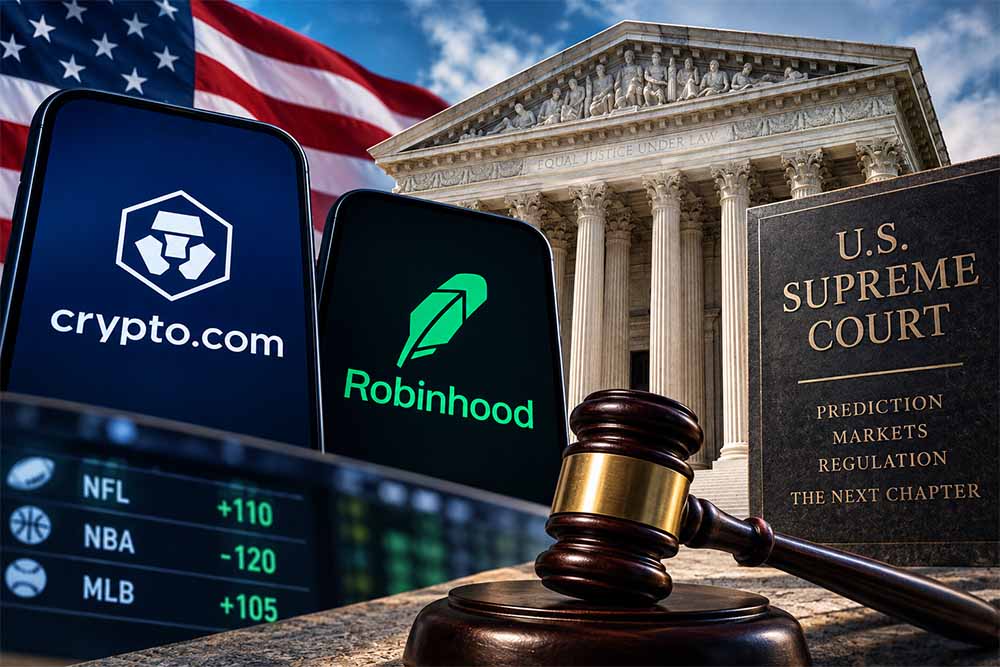
Crypto.com and Robinhood have asked the US Supreme Court to decide whether states can regulate sports prediction markets as gambling, potentially setting up a landmark ruling for the rapidly growing industry.
The two companies have filed separate petitions asking America’s highest court to review the Ninth Circuit’s recent decision allowing Nevada to apply its state gambling laws to sports-event contracts.
Crypto.com’s North American Derivatives Exchange filed its petition on September 11, while Robinhood has lodged its own challenge.
At the centre of the dispute is whether sports-event contracts traded through federally regulated exchanges fall exclusively under the Commodity Futures Trading Commission and Commodity Exchange Act, or whether individual states can treat the products as sports betting.
The issue has become increasingly important because US federal appeals courts have now reached different conclusions.
The Third Circuit previously found that Kalshi’s sports contracts came within federal derivatives regulation.
The Ninth Circuit went the other way in the Nevada litigation, ruling that the sports-event contracts before it were not swaps under the Commodity Exchange Act and rejecting the argument that federal law prevented Nevada from enforcing its gambling laws.
Crypto.com argues that sports-event contracts satisfy the definition of swaps and therefore belong within the federal regulatory framework.
Kalshi has taken a slightly different route following the Ninth Circuit defeat, requesting that the appeals court rehear its case en banc rather than immediately seeking Supreme Court review.
New Jersey has also asked the Supreme Court to become involved from the opposite side of the argument, maintaining that states should retain authority over sports prediction markets.
The Supreme Court has not agreed to hear any of the cases.
However, the contradictory appellate rulings increase the likelihood that the issue will eventually require national clarification.
A Supreme Court ruling could have enormous implications for US gambling because federally regulated prediction markets potentially provide sports-event products in states where conventional online sports betting is either restricted or illegal.
