

US Regulator Clarifies Betting and Prediction Market Rules

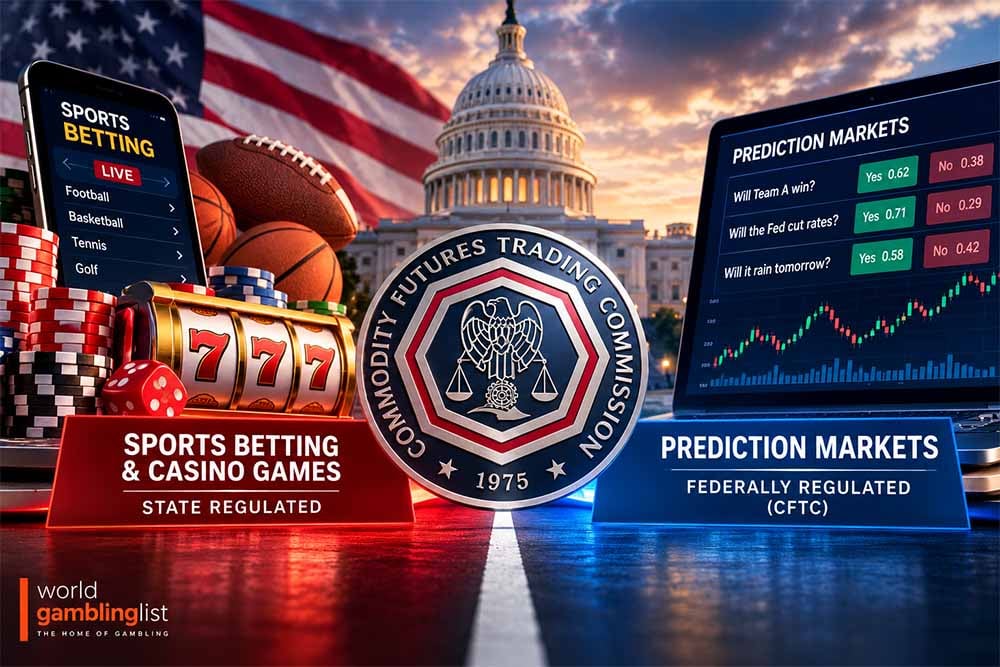
The US Commodity Futures Trading Commission (CFTC) has proposed new rules that would classify sports prediction-market contracts as financial derivatives, strengthening its claim that platforms such as Kalshi fall under federal rather than state gambling regulation.
Announced on October 9, the measures come amid an escalating legal dispute between federal financial regulators, state gambling authorities and prediction-market operators over who has the power to regulate sports-related event contracts.
The first measure is an interim final rule expressly excluding conventional casino-style gambling products, including sportsbook wagers and casino games, from the legal definition of a financial swap.
CFTC chairman Michael Selig said the rule formalised the commission’s longstanding position that traditional gambling products fall outside its derivatives jurisdiction.
“Casino-style gambling products are not derivatives,” Selig said, explaining that the measure clarifies the limits of the commission’s authority over products historically regulated by individual states.
However, the regulator simultaneously published a separate proposed rule that would expressly include event contracts based on sporting, political, cultural and weather-related outcomes within the definition of a swap.
The distinction is significant because prediction-market operators have argued that contracts allowing customers to trade on sporting outcomes are financial instruments rather than conventional gambling products.
Under the proposed framework, traditional bets placed with sportsbooks would remain outside the CFTC’s derivatives jurisdiction, while qualifying event contracts traded through federally regulated exchanges would fall within it.
Selig said Americans use event contracts for hedging, speculation and obtaining information about future outcomes, arguing that these products are derivatives subject to the commission’s authority.
The regulator’s position is unlikely to resolve the dispute immediately, particularly as state gambling authorities have challenged prediction-market companies offering sports-related contracts without obtaining local gambling licences.
Several states argue that sports event contracts function in substantially the same way as traditional sports bets and should therefore be subject to state licensing, consumer protection and sports integrity requirements.
The National Football League has also entered the debate, supporting a request for the US Supreme Court to determine whether state regulators can enforce gambling laws against sports prediction markets.
For conventional sportsbook operators, the CFTC’s latest announcements reinforce the regulatory distinction between state-licensed betting businesses and financial exchanges offering event contracts.
However, the proposed classification of event contracts remains subject to consultation and does not establish that every sports-related contract is lawful in every state.
The interim final rule excluding casino-style gambling products is scheduled to take effect upon publication in the Federal Register, while the separate event-contract proposal must undergo public consultation.
Both measures provide for a 30-day comment period following Federal Register publication.
