

Operators fight back against Brazil’s gambling ban

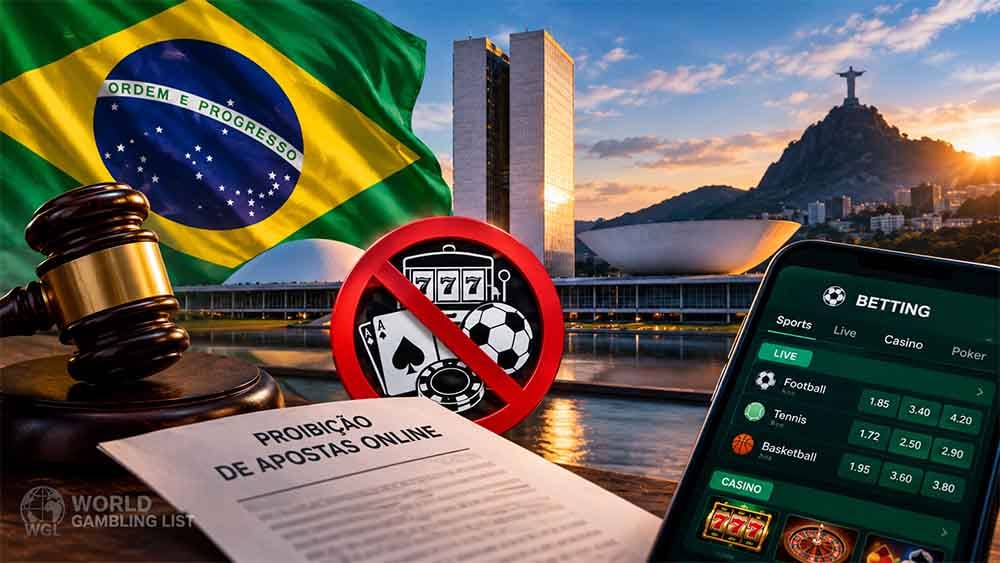
Brazil’s controversial prohibition on online gambling is facing a significant challenge in Congress, with lawmakers submitting 97 amendments to the legislation and several proposals seeking to restore the country’s regulated betting market.
The amendments target Provisional Measure 1,394/2026, which introduced the gambling prohibition in September, less than two years after Brazil established its federal licensing framework for online sports betting and casino games.
The deadline for submitting amendments expired on October 13, with 38 proposals lodged on the final day, while five have been withdrawn, leaving 92 proposals for congressional consideration.
The submissions came from 18 members of the Chamber of Deputies and six senators.
Several lawmakers are seeking to replace the prohibition with tighter regulation, arguing that banning licensed operators will drive customers towards illegal offshore gambling websites.
Congressman Mauricio Neves has proposed restoring the regulated market while introducing additional requirements covering advertising, customer financial checks and technology providers.
His proposal would also reinstate cancelled gambling licences and require illegal gambling advertisements to be removed within 48 hours.
Other lawmakers have called for compensation for operators that paid substantial licensing fees before the government reversed its gambling policy.
Under Brazil’s original licensing framework, companies paid R$30 million for a five-year federal gambling authorisation, while the prohibition has left those investments facing considerable uncertainty.
Some congressional proposals would preserve regulated sports betting while continuing to prohibit online casino games and slots.
Others seek to restrict gambling advertising, including sponsorship arrangements involving football clubs, stadiums and sporting competitions.
Several amendments would allow existing sponsorship contracts to continue for a transitional period rather than requiring their immediate termination.
Lawmakers have also proposed redirecting money confiscated from illegal gambling businesses towards public health programmes, gambling addiction treatment and sport.
The latest developments represent a significant test for the government’s gambling policy, which has faced opposition from licensed operators, industry associations and sporting organisations.
The Brazilian government has defended the measure as part of its efforts to address gambling-related harm.
Congress must now determine whether to approve, amend or reject the provisional measure.
The legislation is scheduled to begin obstructing the congressional agenda on November 9 and will expire on November 23 unless its validity is extended.
Legal challenges are also continuing before Brazil’s Supreme Federal Court.
For gambling operators that invested in Brazil’s regulated market, the 92 remaining amendments offer a potential route towards restoring licensed operations, although there is no guarantee Congress will approve them.
